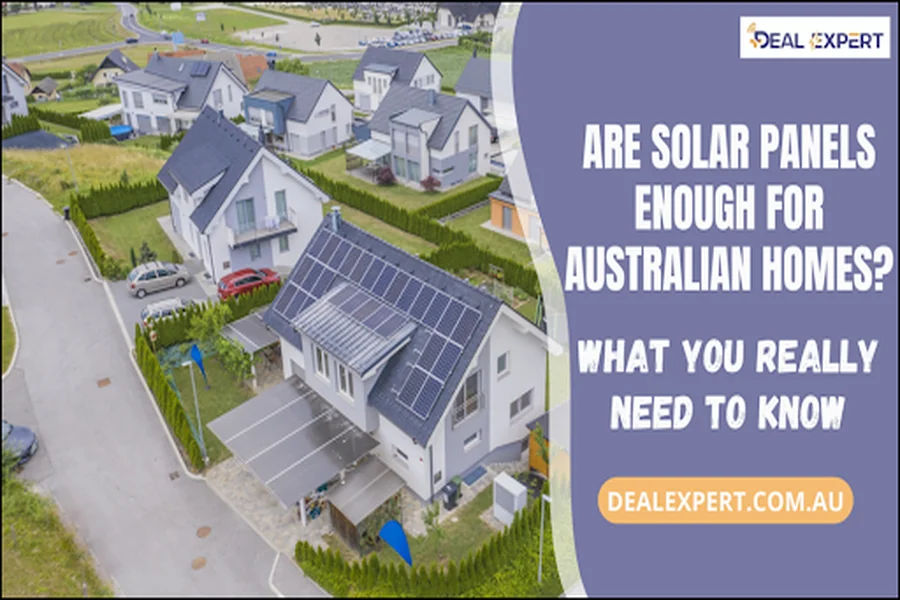
Solar panels alone are rarely enough to power an Australian home around the clock. They cover a large share of your daytime electricity, but they generate nothing after sunset, which is exactly when most households use the most power. To get the full benefit of solar power for your home, panels usually need to work alongside the right system components and the right energy plan.
Here is what actually matters.
Why Panels on Their Own Fall Short
The limitation is simple timing. Panels produce power when the sun is up, but a typical household’s heaviest use lands in the morning and evening, when the sun is low or gone. The average Australian home uses 15 to 20 kWh of electricity per day, and a large chunk of that falls outside peak solar hours. The result is a mismatch:
- Midday: Panels often generate more than you can use
- Morning and evening: Panels generate little or nothing, so you buy from the grid
- Overnight: No generation at all
This is why running a solar-powered house on panels alone still leaves you drawing grid power during the most expensive parts of the day. It also means the rate you pay for that grid power matters, so comparing AGL Electricity Plans and those of other retailers is worth doing, even after you install solar.
The Self-Consumption Problem
Without storage, most homes only use around 50% of the solar energy their panels produce. The rest is exported to the grid for a feed-in tariff that is usually just a few cents per kWh, far less than the 30 to 40 cents you pay to buy it back in the evening.
That gap is the core issue. You generate cheap power, sell the excess for very little, then buy expensive power hours later. A well-designed domestic solar power system aims to close that gap, either by shifting your usage into daylight hours or by storing the surplus. Even with this limitation, solar remains hugely worthwhile. Over 44% of Australian households now have rooftop solar, the highest rate in the world, and systems typically pay for themselves within two to five years. Panels are the right foundation. They just rarely finish the job on their own.
What You Actually Need Alongside Panels
To get closer to powering your home fully, most households need to think beyond the panels themselves.
● Home Battery Storage
A battery is the single biggest upgrade. It stores your excess daytime generation so you can use it at night, during the evening peak, or in a blackout:
- Stores surplus solar instead of exporting it cheaply
- Powers lights, the fridge, and appliances after dark
- Provides backup during outages (if configured for it)
- Adds roughly $7,000 to $16,000 after the federal rebate, depending on size
For households wanting predictable costs while a battery pays off, pairing it with a fixed-rate option like EnergyAustralia Energy Plans makes budgeting easier, since your grid rates stay steady even as your stored-power use varies.
● A Hybrid (Smart) Inverter
The inverter is the brain of the system. A hybrid inverter manages the flow of power between your panels, your home, the grid, and your battery, deciding in real time what to use, store, or export. If you plan to add a battery later, a hybrid inverter now saves you from replacing it down the track.
● The Right System Size
Old advice was to match your panels to last year’s power bill. That no longer holds. Experts now recommend sizing up, 6 kW to 10 kW or more, if you plan to:
- Charge an electric vehicle
- Add a battery
- Run electric heating or an induction cooktop
- Electrify more of your home over time
The average new system has already grown to 6.8 kW for this reason. Undersizing is the most common regret, because adding capacity later costs more than building it in upfront.
● Correct Roof Orientation
Where your panels face changes how useful their output is:
- North-facing: Maximises total daily generation
- West-facing: Captures the late afternoon and evening peak, when you use more
- East-facing: Suits households with heavy morning use
A good installer matches your panel layout to when your household actually uses power, not just to total output.
● Panels, the Grid, and Your Plan
Here is the part many homeowners overlook. Even a large, well-designed system still interacts with the grid daily, importing at night and exporting during the day. That means your energy plan directly affects how much your solar actually saves you. Two numbers decide it:
- Your feed-in tariff – what you earn for exported solar
- Your usage rate – what you pay when you draw from the grid
Because solar and the grid interact every single day, a competitive plan can be the difference between a good return and a mediocre one. A high feed-in rate paired with a high usage rate can still leave you worse off, so the whole plan matters, not one figure.
This is why comparing retailers is as important as choosing panels. Options like EnergyAustralia Solar Plans are structured around solar households, with feed-in arrangements that suit homes exporting surplus power. Comparing them against other retailers for your postcode ensures you capture the full value of what your panels produce.
How Deal Expert Helps
Getting the most from solar panels and home energy use is not just about the hardware. The plan you are on decides how much value you get from every kilowatt-hour you generate and export. Deal Expert compares plans from a wide range of retailers for your specific postcode, so you can line up a competitive feed-in tariff and usage rate to match your system. It is free to use, ISO 27001-certified, and rated 4.8 stars across more than 1,700 reviews. You can compare AGL electricity plans, EnergyAustralia energy plans, and many others online in minutes, or speak to a consultant six days a week, so your solar set-up pays off from day one.
Summary
Solar panels are an excellent foundation, but rarely enough on their own. They generate during the day, while most households use power in the morning and evening, and without storage, a typical home only self-consumes about half of what it produces. To power more of your home, you generally need a battery, a hybrid inverter, a system sized for your future needs, and panels oriented to your usage. Just as important is your energy plan, since your home imports and exports from the grid every day. Comparing retailers ensures you earn a fair feed-in tariff and pay a competitive usage rate, which is what turns good panels into real savings.
Frequently Asked Questions
Q: Can solar panels power a whole house in Australia?
Not on their own around the clock. Panels can cover most daytime use, but they generate nothing at night. To power your home fully, you generally need a battery to store daytime surplus for evening and overnight use.
Q: How many solar panels does an average Australian home need?
Most households now install a 6.6 kW to 10 kW system. Larger sizing is recommended if you plan to add a battery, charge an EV, or run electric heating, since these significantly increase your consumption.
Q: Is a solar battery worth the extra cost?
For households with high evening use, yes. A battery lets you use your own stored solar at night instead of buying expensive grid power, and it provides blackout backup. Payback depends on your usage, tariffs, and battery size.
Q: Does my energy plan affect how much I save with solar?
Significantly. Your feed-in tariff and usage rate both determine your return. Because your home imports and exports from the grid daily, comparing retailers for a competitive plan is as important as choosing the right panels.