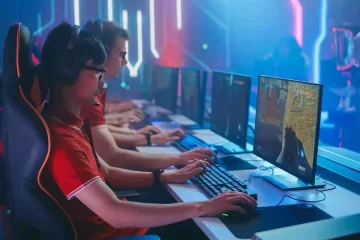
The advent of online JPTOTO games has brought about profound changes in how we interact with others, reshaping the social landscape in ways that were unimaginable just a few decades ago. What began as simple multiplayer games where players could join together over a local area network (LAN) has evolved into an interconnected global phenomenon. Today, online games are more than just a form of entertainment; they are social hubs, virtual communities, and even platforms for collaboration, education, and activism.
As online gaming continues to grow in popularity, its impact on social dynamics has become increasingly evident. From creating new ways to build friendships to providing opportunities for people to communicate across geographic boundaries, online games are fostering a new form of social interaction. In this article, we will explore how online games are changing the social landscape, with a focus on community building, virtual identities, inclusivity, and the influence of gaming culture.
Creating Virtual Communities
One of the most significant changes brought about by online slot gacor games is the rise of virtual communities. Games like World of Warcraft, League of Legends, and Fortnite have created vast online ecosystems where players from all over the world can connect, collaborate, and form lasting relationships. These virtual communities are often built around common interests, such as competitive gameplay, casual play, or shared experiences within the game world.
These communities can be organized around guilds, clans, or informal groups that offer a sense of belonging and camaraderie. Players can find a space where they feel valued, and they can participate in meaningful interactions with others who share similar passions. These online communities often extend beyond the game itself, with players communicating on social media platforms, joining Discord servers, and attending live events like Twitch streams or esports tournaments. These spaces offer individuals a chance to forge friendships, build support systems, and engage in shared activities, all of which contribute to a sense of connectedness.
For many, online games have become their primary social outlet. According to a study by the Pew Research Center, 72% of teenagers in the United States have played online multiplayer games, and many use them as a way to stay in touch with friends. For people living in rural areas or places with limited social opportunities, online games can provide a crucial means of connection, helping them build relationships that they might not have access to otherwise.
Redefining Identity and Self-Expression
Online games are also transforming how individuals define themselves socially and express their identities. In the past, people’s identities were largely shaped by their real-world surroundings—family, school, work, and local communities. However, in the digital age, online games have given rise to a new realm for self-expression, where players can adopt new personas, experiment with different identities, and explore parts of themselves they may not otherwise have access to.
In massively multiplayer online role-playing games (MMORPGs) like World of Warcraft or Final Fantasy XIV, players can create avatars that represent themselves in the virtual world. These avatars can be customized to reflect a player’s personality, appearance, and interests, allowing them to break free from real-world constraints. In many ways, the freedom to construct and modify virtual identities allows players to explore different facets of themselves in a more liberated and non-judgmental environment.
The ability to create and control a virtual representation of oneself can also provide a sense of empowerment, especially for people who may feel marginalized or disconnected in their offline lives. For example, LGBTQ+ players often find online games to be a welcoming space where they can express their gender identity or sexual orientation without fear of discrimination. As gaming communities become more diverse and inclusive, this freedom of self-expression continues to grow.
In addition to virtual identities, many online games allow players to communicate through user-generated content, such as custom skins, artwork, and in-game creations. Platforms like Minecraft, Roblox, and The Sims give players the tools to build virtual worlds, create personalized experiences, and share their creativity with others. This further emphasizes the role of online games as platforms for self-expression, where players can showcase their unique talents and ideas to a global audience.
Promoting Inclusivity and Diversity
Online gaming has played a pivotal role in fostering inclusivity and promoting diversity within digital spaces. Games have become more diverse in terms of their characters, storylines, and gameplay mechanics. For example, developers are now more conscious of creating characters that represent various races, genders, sexual orientations, and abilities, allowing players from different backgrounds to see themselves reflected in the games they play.
Games like Overwatch, The Last of Us Part II, and Assassin’s Creed Valhalla feature diverse characters with rich backstories and complex personalities, which allow players to connect with and empathize with characters who may not resemble themselves physically. This shift toward diversity in gaming is important because it helps to break down stereotypes and broaden players’ perspectives on different cultures and experiences.
Additionally, online games have become spaces for social movements and activism. Games like Animal Crossing: New Horizons and Fortnite have hosted in-game events focused on social causes, such as Black Lives Matter or LGBTQ+ pride. These virtual events create safe spaces where players can express solidarity, learn about important issues, and engage in activism without the barriers of traditional media or physical location.
Esports has also contributed to inclusivity in gaming by offering a platform for diverse players to shine. Women and non-binary individuals are increasingly represented in competitive gaming, and many organizations and tournaments are working to ensure that gaming is welcoming to all players, regardless of their background or identity.
Transforming Communication and Social Interaction
Online games have revolutionized how people communicate with each other. Traditional gaming, which often relied on couch co-op or single-player experiences, has evolved into a highly social activity. Today, players can communicate with others in real-time through in-game voice chat, text chat, and even video calls via external platforms like Discord.
These communication tools have made gaming more interactive and dynamic, enabling players to strategize, collaborate, and share experiences while playing. The rise of live streaming platforms like Twitch has further transformed the way players connect with one another. Streamers can broadcast their gameplay to a global audience, interacting with viewers through live chats, donations, and subscriptions. This level of engagement has created a new form of social interaction where fans can connect with their favorite streamers, forming communities around shared interests.
The emergence of online multiplayer games has also changed how people socialize during leisure time. Players no longer need to meet in person to play together. Virtual friendships can be just as meaningful as those in the physical world, and some players form long-lasting bonds with people they’ve never met face-to-face. Online games have bridged the gap between people from different walks of life, allowing them to connect and form relationships based on shared interests rather than geographic location.
The Influence of Gaming Culture
The social influence of online games extends far beyond the virtual world. Gaming culture has become a significant part of mainstream entertainment, with gamers influencing trends in music, fashion, and media. Esports events are now broadcast on television, and popular games are often featured in movies and television shows. The growing popularity of game-based content, such as Twitch streams and YouTube gaming channels, has made gaming a central part of modern pop culture.
Gaming culture has also contributed to the development of internet subcultures, with memes, fan art, and game-related content flooding social media platforms. Games like Minecraft and Among Us have created entire subcultures where fans share creations, strategies, and jokes. This has led to the creation of communities that revolve around specific games or gaming experiences, often transcending the games themselves and forming long-lasting social phenomena.
As gaming becomes more intertwined with mainstream culture, the social influence of online games will continue to grow, shaping the way people connect, collaborate, and express themselves.
Conclusion
Online games have profoundly transformed the social landscape, offering new ways for people to communicate, build communities, and express themselves. From creating virtual friendships that transcend geographic boundaries to providing platforms for social activism, online games have become powerful tools for social interaction. As gaming continues to evolve, it will likely play an even more prominent role in shaping how we connect with others, offering a new form of social space where identity, diversity, and inclusivity are celebrated. Whether you’re an avid gamer or a casual player, the impact of online games on the social landscape is undeniable, and their influence is only expected to grow in the years to come.